 Fairhaven Siding
 Marietta's Roofs Work Harder Than Most
Marietta sits close to the water on Bellingham Bay, just up the shoreline from Fairhaven, and that location shapes everything about how a roof ages here. Homes in this pocket of Whatcom County deal with a combination most inland neighborhoods don't: salt-laden air drifting off the bay, driving rain that comes in sideways during winter storms, and a shade-and-moisture combination that keeps moss actively growing for most of the year. A roof that would hold up fine in a drier part of the state can show real wear here a decade or more ahead of schedule.
That's not a reason to panic about your roof — it's a reason to be honest about what it needs. A correctly specified, correctly installed roof replacement in this climate is very doable and should last its full expected service life. The problems come from roofs that were built to a generic spec rather than a coastal Whatcom County one.
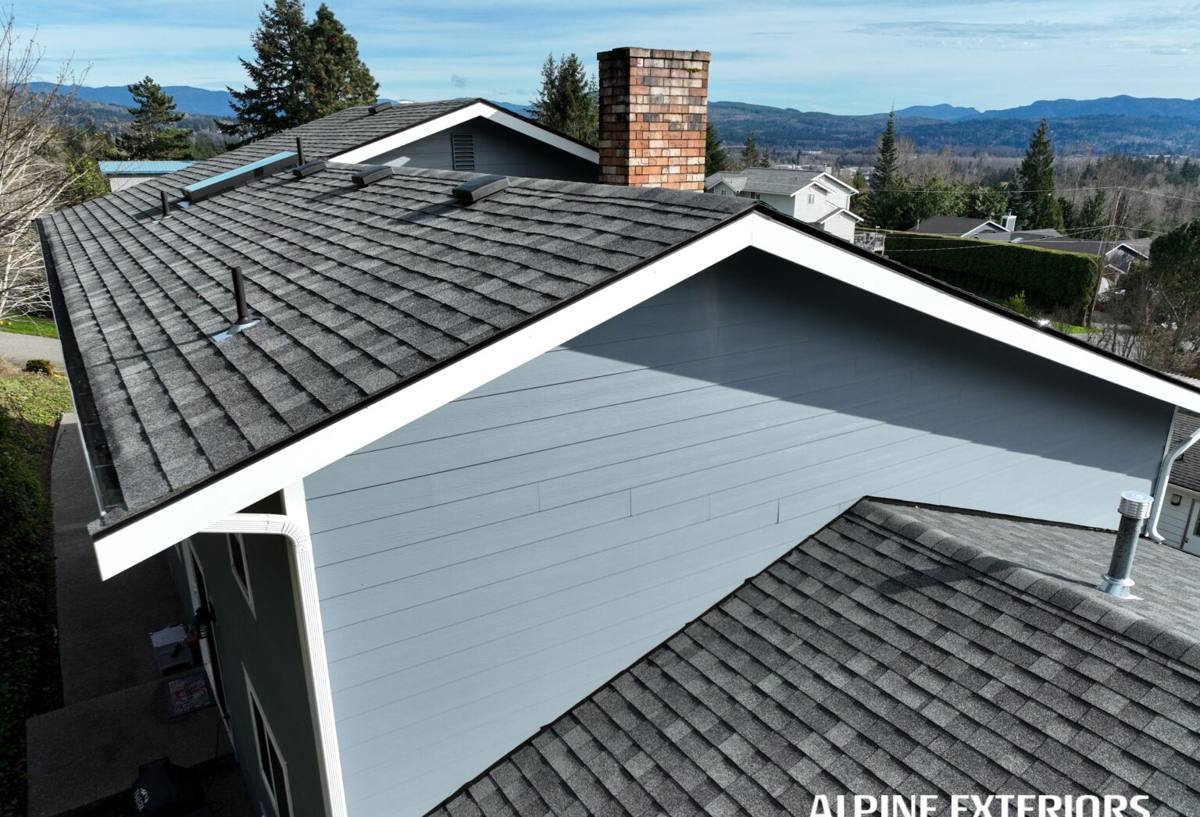
What Salt Air, Rain, and Moss Actually Do to a Roof
Salt Air
Airborne salt is corrosive to exposed metal — nails, flashing, gutter fasteners, and any unprotected fastener heads. Over years, that corrosion can loosen flashing seals and create small entry points for water long before the shingles themselves look worn out. It's a slow process, which is exactly why it gets missed during a quick visual check from the ground.
Driving Rain
Wind-driven rain off the bay doesn't just fall straight down — it pushes sideways and upward under eaves, around valleys, and against any flashing that isn't properly lapped. A roof system built for calmer inland conditions can pass fine in a light rain and still leak during a real Whatcom County winter storm.
Moss and Shade
Between tree cover and the region's long wet season, moss has a lot of time to establish itself on north-facing slopes and shaded valleys. Moss holds moisture against the roofing surface, which shortens the life of asphalt shingles, can lift shingle edges, and — left unchecked for years — works its way under the roofing material at seams and fasteners.
Signs a Marietta Roof Needs Replacement, Not Another Repair
Repairs make sense for isolated damage. Replacement makes sense when the roof's overall condition means repairs would just be patching a system that's failing everywhere at once. Common indicators we look for on local homes:
- Granule loss heavy enough that you can see bare, shiny patches on shingles, especially on south- and west-facing slopes
- Persistent moss growth that returns within a season or two of cleaning, even after treatment
- Curling, cupping, or cracked shingles across multiple areas of the roof rather than one isolated spot
- Soft spots in the decking when walked, or visible sagging along the roofline
- Rust staining or visible corrosion at flashing, vents, or valleys
- Interior water stains on ceilings or attic sheathing, particularly after a wind-driven rain event
- A roof that's at or past 20–25 years old for asphalt shingle in this climate, even without obvious damage
If a roof is showing two or more of these at once, that's usually a sign the underlying materials — not just the surface — have reached the end of their useful service life.
What a Correct Roof Replacement Involves Here
A roof replacement is more than swapping old shingles for new ones. In a coastal, wet, shaded climate like Marietta's, the parts of the system most homeowners never see are what determine whether the new roof actually outperforms the old one.
Tear-Off and Deck Inspection
We remove the old roofing down to the deck so we can actually see what's underneath. This is the point where hidden rot, soft sheathing, or old water damage gets found and addressed — not covered over. Any compromised decking gets replaced before anything new goes down.
Underlayment and Moisture Barrier
Given the amount of driving rain this area sees, we pay particular attention to underlayment coverage and lapping direction, and we use ice-and-water shield style membrane at vulnerable points — eaves, valleys, and around penetrations — where wind-driven rain is most likely to get pushed uphill under the roofing surface.
Flashing and Edge Detail
Flashing is where most leaks actually start, and it's the piece most affected by salt-air corrosion over time. We use flashing materials and fastening methods suited to a marine-influenced environment, with attention to step flashing at walls, valley flashing, and drip edge at eaves and rakes.
Ventilation
Proper intake and exhaust ventilation keeps moisture from building up inside the attic, which matters twice over here: it protects the roof deck from the inside, and it helps reduce the damp, cool conditions that moss and algae thrive in from underneath as well as above.
Choosing Roofing Materials for This Climate
There's no single "best" roofing material — the right choice depends on the home's exposure, roof pitch, budget, and how much long-term maintenance the homeowner wants to take on. Here's how the common options compare for a Marietta-area home:
| Material | Moss/Algae Resistance | Salt Air Durability | Typical Lifespan Here | Maintenance |
|---|---|---|---|---|
| Asphalt composition shingle (standard) | Moderate — benefits from algae-resistant granules | Good with corrosion-resistant fasteners/flashing | 18–25 years | Periodic moss removal recommended |
| Asphalt shingle (algae-resistant, copper-infused granules) | Improved over standard shingle | Good | 20–28 years | Lower moss maintenance than standard |
| Metal (standing seam or coated panel) | Strong — moss struggles to hold on smooth metal | Requires marine-grade coatings/fasteners near the water | 40+ years | Low; occasional debris clearing |
| Synthetic/composite shake or slate | Good, varies by product | Good with proper flashing detail | 30–50 years | Low to moderate |
We'll walk through these trade-offs with you directly rather than pushing one option — the right call depends on your roof's pitch, shading, and how the home is oriented relative to the bay.
Our Roof Replacement Process
- On-site inspection. We assess the current roof, deck condition, ventilation, and any moss or moisture patterns specific to your property's shade and exposure.
- Written estimate. A clear scope of work and material options, with pricing explained plainly — no vague allowances.
- Scheduling around weather. Given how much rain this region gets, we plan tear-off and dry-in carefully so your home isn't left exposed longer than necessary.
- Tear-off and deck repair. Old roofing comes off, decking is inspected, and any damaged sections are replaced.
- Underlayment, flashing, and ventilation install. The parts of the job that determine long-term performance go in first, done to spec for this climate.
- Roofing material installation. Installed to manufacturer specification so warranty coverage stays intact.
- Cleanup and final walkthrough. We clear debris, including magnetic sweep for stray fasteners, and walk the finished roof with you.
Moss Prevention and Long-Term Maintenance
A new roof lowers your moss risk, but it doesn't eliminate it — not in a climate this wet and shaded. What actually extends the life of a roof here is simple, consistent upkeep:
- Keep overhanging branches trimmed back to reduce shade and debris buildup on the roof surface
- Clear gutters and valleys of needles and leaf debris each fall, before the heavy winter rains start
- Have moss growth removed gently (not scraped or pressure-washed aggressively, which can strip granules) as soon as it appears
- Consider zinc or copper strips near the ridge on moss-prone slopes to help suppress regrowth between cleanings
- Schedule a roof check after major wind events to catch lifted flashing or displaced shingles early
Permits and Local Considerations
Roof replacement in Whatcom County typically requires a building permit, and we handle that process as part of the job rather than leaving it on the homeowner. If your Marietta property falls under an HOA or has specific covenants around roofing materials or color, we'll factor that into material selection during the estimate rather than after ordering. Being close to the water can also mean specific considerations around scaffolding, staging, and access — something we plan for up front on waterfront-adjacent properties.
Why a Crew That Already Works in Marietta Matters
Roofing crews that mostly work drier, inland areas don't always think about salt-air corrosion at fastener points, or about how shaded valleys here hold moss year-round in a way they might not fifteen miles inland. A crew that already works in and around Fairhaven and Marietta has seen how roofs actually fail in this specific microclimate — not roofing failures in general, but the specific patterns tied to bay-adjacent, moss-heavy, rain-driven conditions. That local pattern recognition is what shows up later as a roof that still performs well at year fifteen instead of one that needed emergency flashing repairs by year six.
If your roof in Marietta is showing its age, or you just want an honest read on how many years it has left, we're happy to take a look. Reach out for a free, no-pressure estimate — we'll walk the roof, explain what we see, and give you straight options with no obligation.