 Fairhaven Siding
 Lummi Island Roofs Work Harder Than Most
A roof on Lummi Island earns its keep. Sitting out in the Salish Sea, homes here take on salt-laden air that corrodes fasteners and flashing faster than roofs just a few miles inland in Fairhaven or Bellingham. Add in the driving, wind-pushed rain that comes off the water during winter storms, and a moss season that can stretch from late fall through spring, and you've got a roof that's under near-constant pressure to shed water and hold its seal. Most of the repair calls we get out here trace back to one of those three factors, sometimes all at once.
This page is specifically about roof repair on Lummi Island — not full tear-offs, not general roofing information. If your roof is leaking, losing granules, growing moss, or showing storm damage but doesn't need a full replacement yet, this is what we do and how we do it out here.
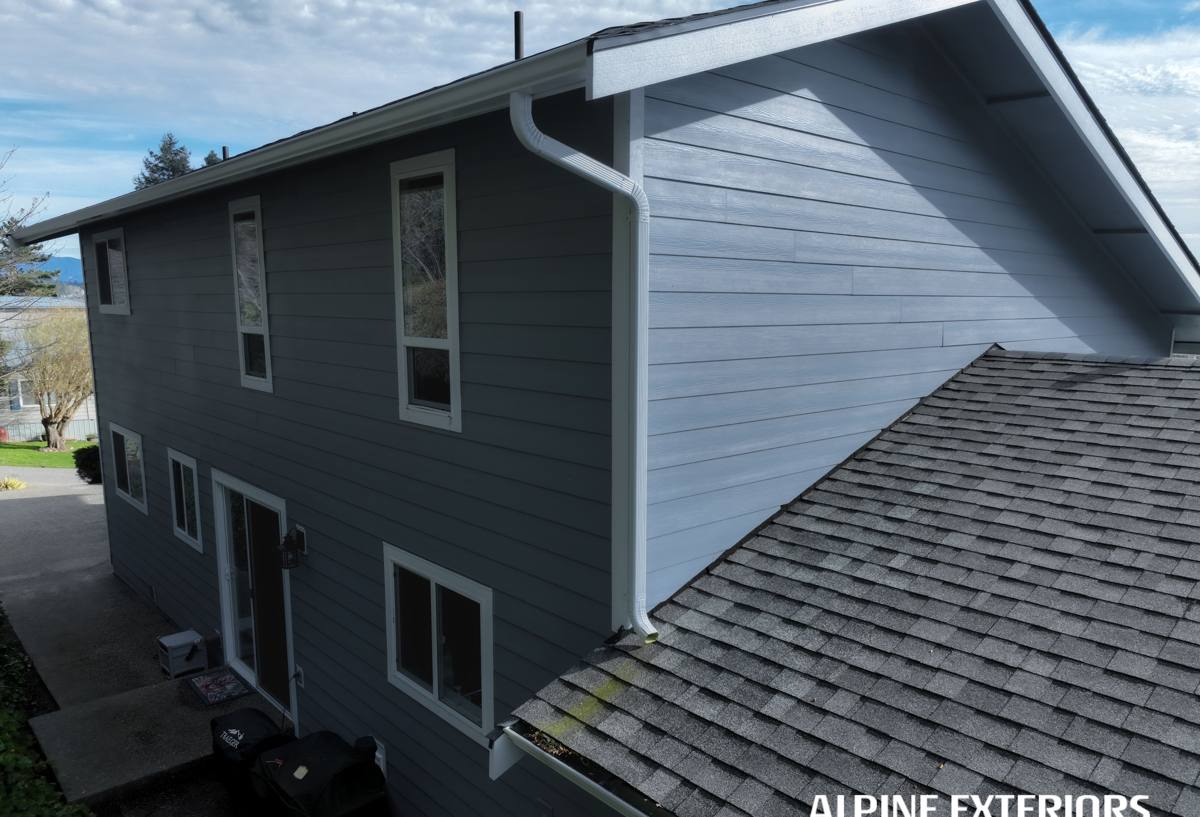
What Actually Causes Roof Damage on the Island
Salt Air and Corrosion
Metal fasteners, flashing, and drip edge take the brunt of salt exposure. Galvanized nails and unprotected metal components corrode from the inside out, and by the time you see rust bleeding through a shingle or staining a soffit, the metal underneath has usually been failing for a while. This is one of the most common reasons a roof that "looks fine" from the ground is actually leaking at a seam or penetration.
Driving Rain and Wind-Driven Water
Whatcom County gets plenty of rain, but on the island the wind off the water pushes it sideways, not just straight down. That matters because a roof can be watertight against normal rainfall and still leak during a windstorm, because water is being forced up and under shingle edges, around chimneys, and through valleys instead of running off. Repairs that only address gravity-fed leaks miss this entirely.
Moss and Organic Growth
Moss holds moisture directly against the roofing material for months at a time. On shaded, north-facing slopes — common on wooded island lots — moss can establish itself within a couple of seasons if it's never cleared. It works into shingle edges, lifts tabs, and traps water against the deck. On cedar shake, it's even more of a concern because it holds moisture against wood that's meant to dry out between rains.
The Repairs We Handle Most Often Out Here
- Active leaks — around chimneys, skylights, plumbing vents, and dormers
- Flashing repair or replacement — step flashing, valley flashing, counter-flashing at walls
- Storm damage — wind-lifted or torn-off shingles, damaged ridge caps, displaced metal
- Moss and debris removal, including gentle cleaning that doesn't strip granules or damage shakes
- Valley repair — one of the most leak-prone areas on a roof under driving rain
- Localized shingle or shake replacement after isolated damage
- Fastener and nail-pop repair where salt corrosion has backed nails out
- Emergency tarping and temporary weatherproofing after storm damage
What a Correct Repair Actually Involves
A roof repair that holds up on Lummi Island isn't just slapping sealant over a stain and calling it done. A correct repair starts with finding where water is actually entering — which is often several feet away from where it shows up inside, since water travels along the deck and framing before it drips. We trace the path, check the flashing and underlayment condition around the entry point, and only then decide what actually needs to come apart and be rebuilt.
Material matching matters too. Shingles fade and granules wear unevenly over years of sun and salt exposure, so a patch using brand-new material next to ten-year-old shingles will always look slightly different — that's physics, not a workmanship issue, and we'll tell you honestly what to expect before we start. What we won't do is use mismatched flashing metal, undersized patches, or sealant as a substitute for proper flashing work. Sealant has its place, but it's a short-term fix, not a repair method, and over-reliance on it is one of the most common reasons "fixed" leaks come back within a year or two.
Repair or Replace? What We Weigh
| Situation | Repair Usually Makes Sense | Replacement Usually Makes Sense |
|---|---|---|
| Age of roofing material | Under roughly 15-18 years, isolated wear | Approaching or past expected material lifespan roof-wide |
| Damage pattern | Localized — one slope, one flashing area, one storm event | Widespread — multiple leaks, granule loss across most slopes |
| Decking condition | Solid, no rot at the repair site | Soft spots, rot, or multiple areas of deck damage |
| Moss/organic damage | Surface growth, shingles intact underneath | Moss has been present for years, lifting shingles or shakes broadly |
| Cost outlook | Lower upfront cost, targeted fix | Higher upfront cost, but avoids repeated repair calls on an aging roof |
We'll always give you a straight answer on which side of this table your roof falls on. If a repair is the honest call, that's what we'll recommend — we're not in the business of selling replacements to homeowners who don't need one yet.
Our Process for Lummi Island Repair Calls
Getting to the Island
Working on Lummi Island means factoring in ferry access, and we plan around it rather than treating it as an afterthought. We schedule repair visits to make the most of the trip — that usually means completing the diagnosis and the repair in the same visit whenever the scope allows, rather than a separate inspection trip followed by a second trip for the work. For larger repairs needing specific materials, we confirm what's needed and bring it with us the first time.
Diagnosis First
We inspect the roof surface, flashing points, valleys, and attic or interior signs of moisture before quoting anything. On a repair call, guessing costs you money — either from underscoping the job or overselling work that isn't needed.
Clear Scope, Then the Work
Once we know what's actually failing, we walk you through what needs to happen, why, and what it'll cost before any work starts. No surprise add-ons discovered halfway through unless something genuinely unexpected turns up once we open up the area — and if that happens, we stop and talk to you before proceeding.
Materials You'll Find on Island Roofs
Lummi Island homes are roofed in a mix of asphalt composition shingle, standing seam and other metal roofing, and cedar shake, with shingle being the most common. Each has different repair considerations:
- Asphalt composition shingle — the most straightforward to patch and match, though older shingles may be more brittle and prone to cracking when lifted for flashing repair.
- Metal roofing — durable against moss and rot, but seams, fasteners, and flashing details are where salt-air corrosion shows up first and need periodic attention.
- Cedar shake — a traditional look that needs the most active moss and moisture management out here; individual shake replacement is possible but requires matching weathering and grain as closely as we can.
Timing Your Repair Around the Seasons
Late spring through early fall is the most workable window for most roof repairs on the island — drier conditions, easier access, and time to fully dry out any area we open up before closing it back in. That said, storm damage and active leaks don't wait for good weather, and we handle emergency and off-season repairs, including temporary weatherproofing, whenever they're needed. If moss has been building up over a wet winter, late spring is also a practical time to have it cleared before it does another season's worth of damage.
Signs You Likely Need a Repair Call Now
- Water stains on ceilings or interior walls, especially after a windy rainstorm
- Visible moss buildup, particularly on shaded or north-facing slopes
- Shingles that look lifted, curled, cracked, or missing after a storm
- Rust staining running down from flashing, vents, or metal roofing seams
- Granules collecting in gutters in noticeably larger amounts than usual
- Daylight visible through the roof deck from inside the attic
- Soft or spongy feel underfoot near known problem areas (approach with caution)
Why It Matters to Hire a Crew That Already Works Lummi Island
A contractor who hasn't worked on the island before has to relearn the logistics on your dime — ferry timing, material planning, and the reality that a forgotten tool or part means a lost trip, not a quick run to the truck. We factor all of that into how we schedule and scope island jobs so it doesn't turn into delays or repeat visits for you. We also know what salt air and moss do to roofs in this specific location over time, which shapes how we diagnose a leak and what we check for even when it isn't the obvious problem.
If you're dealing with a leak, storm damage, or a roof that's carrying more moss than it should, we're glad to take a look. Fill out the form below for a free, no-pressure estimate — we'll tell you honestly whether it's a repair job or something bigger, and what we'd recommend either way.