 Fairhaven Siding
 Silver Beach Homes Face a Specific Kind of Weather Test
Homes in and around Silver Beach don't deal with generic Pacific Northwest weather — they deal with a specific combination of it. Moist air off the water, wind-driven rain that hits siding at an angle instead of falling straight down, and long stretches of overcast, damp weather that never quite lets a north-facing wall dry out. That combination is hard on siding materials that aren't built for it, and it's a big part of why we install James Hardie fiber cement exclusively rather than offering a menu of cheaper alternatives.
This page is specifically about James Hardie siding for the Silver Beach area — not a general overview of siding options. If you live in this neighborhood and are looking at re-siding or building new, this is what we've learned matters most.
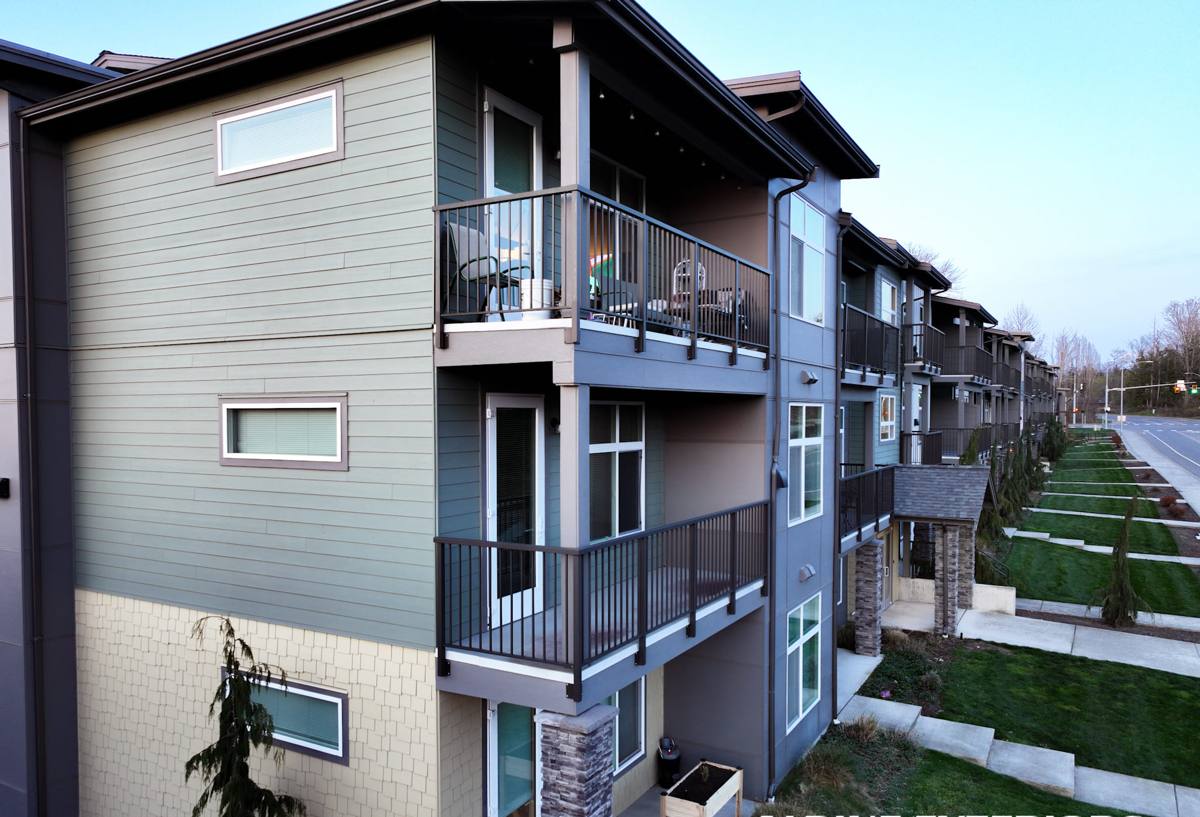
The Climate Factors That Actually Matter Here
Salt Air and Airborne Moisture
Homes closer to the water take on salt-laden air that accelerates corrosion on exposed metal — fasteners, flashing, trim edges — and speeds up the breakdown of paint films that aren't formulated to resist it. It's not dramatic or sudden damage; it's a slow, cumulative wear pattern that shows up first as chalking, fading, or rust bleed at fastener heads, usually within the first several years on lower-grade materials.
Driving Rain
Whatcom County doesn't just get rain, it gets wind-driven rain that pushes water sideways into laps, seams, and butt joints instead of letting it run straight down and off. Siding systems that rely on gravity alone to shed water — rather than being installed with correct laps, gaps, and flashing details — end up taking on moisture behind the cladding, which is where rot and mold actually start.
A Long Moss and Algae Season
Shaded, north-facing walls and anything near mature trees or fencing stay damp for months at a time. That's exactly the environment moss and algae need to establish themselves on a siding surface. Once organic growth gets a foothold in a porous or poorly sealed material, it holds moisture against the wall even longer, which compounds the problem.
Why James Hardie Fiber Cement Is What We Install
We do not install vinyl siding, LP SmartSide, Cemplank, Allura, primed spruce, or cedar. That's a deliberate standard, not a limitation on what we're capable of installing. Each of those products has real advantages in the right situation — vinyl is inexpensive, engineered wood is lightweight, cedar looks great fresh off the wall. But in a marine-influenced, high-moisture climate like this one, they each carry trade-offs we're not willing to put our name behind: vinyl expands, contracts, and can warp or crack in temperature swings and impact; engineered wood products are wood-based at the core and depend heavily on perfect installation and maintenance to keep moisture out; cedar requires ongoing refinishing to keep performing and looking good.
James Hardie fiber cement is cement, sand, and cellulose fiber — it doesn't rot, it isn't a food source for pests, and it doesn't combust. For a neighborhood dealing with salt air, driving rain, and a long damp season, that's the material profile we want on a wall.
HZ5 — Engineered for This Exposure
James Hardie makes climate-specific product formulations under its HZ (HardieZone) system. For the Pacific Northwest's wet, moderate climate, the HZ5 formulation is engineered with moisture and freeze-thaw performance in mind — it's a different mix design than the product sold in hot, arid regions. Installing the correct HZ formulation for this zone isn't optional in our process; it's the baseline.
ColorPlus Factory Finish
Most of what fails first on painted siding isn't the substrate, it's the paint film — chalking, fading, and peeling from UV and moisture cycling. Hardie's ColorPlus finish is baked on in a factory-controlled environment, which gives it more consistent adhesion and UV resistance than field-applied paint, along with a longer finish warranty. In a climate that's hard on paint, that difference compounds year over year.
What a Correct Installation Actually Involves
Fiber cement siding is only as good as the installation behind it. A poor install of a great product will still leak, and it's the single biggest variable in how a siding job performs over the next 20-plus years. For Silver Beach specifically, a correct job means:
Moisture Management Behind the Cladding
A drainage plane (weather-resistive barrier) installed correctly, with proper laps and taped seams, plus a rainscreen gap in appropriate locations so any moisture that does get behind the siding has somewhere to go and dry out rather than sitting against the sheathing.
Flashing at Every Penetration
Windows, doors, hose bibs, light fixtures, deck ledgers — every penetration is a potential entry point for wind-driven rain. Flashing has to be integrated with the water-resistive barrier in the correct shingle-lap order, not just caulked over after the fact.
Fastening and Clearances to Spec
James Hardie publishes specific fastener spacing, type, and corrosion-resistance requirements, along with minimum clearances from grade, roof lines, and decks. Skipping these to save time is one of the most common ways an otherwise good product ends up with a warranty problem down the line.
Correct Laps and Caulking at Seams
Butt joints and seams need to be installed and sealed per manufacturer detail, not just butted and painted over. In a driving-rain climate, this is where sloppy work shows up first.
| Installation Detail | Why It Matters in This Climate |
|---|---|
| Rainscreen / drainage gap | Lets moisture that gets behind the siding dry out instead of sitting against sheathing |
| Correct HZ5 product formulation | Matched to Pacific Northwest moisture and freeze-thaw exposure |
| Manufacturer-spec flashing at penetrations | Blocks wind-driven rain at windows, doors, and fixtures |
| Corrosion-resistant fasteners | Resists salt-air corrosion near the water |
| Factory ColorPlus finish | Outlasts field-applied paint under UV and constant damp cycling |
Our Process for a Silver Beach Project
- On-site inspection of the existing wall assembly, including checking for hidden moisture damage before we quote anything.
- Recommendation of the correct James Hardie product line, profile, and HZ5 formulation for your home's exposure.
- Written scope covering drainage plane, flashing details, fastening schedule, and trim approach — not just "install siding."
- Removal of old siding and repair of any sheathing or framing issues found underneath, documented before we cover it back up.
- Installation to manufacturer spec, including inspection of our own laps, flashing, and fastening before final trim goes on.
- Final walkthrough so you understand what was done and what maintenance, if any, it needs going forward.
Cost Factors Homeowners Should Understand
We don't publish fixed prices because every home's exposure, existing condition, and complexity are different, but these are the factors that actually move the number:
| Factor | Why It Affects Cost |
|---|---|
| Condition of existing sheathing | Hidden rot or moisture damage found during tear-off requires repair before new siding goes on |
| Home complexity | Multiple stories, dormers, and cut-ins take more labor and flashing detail than a simple rectangle |
| Siding profile and trim selection | Lap width, panel vs. plank, and trim details vary in material and labor cost |
| Access and site conditions | Water-adjacent lots, slopes, and tight setbacks affect staging and scaffolding time |
Maintenance Checklist for Hardie Siding in a Silver Beach Exposure
Fiber cement is low-maintenance, not no-maintenance. In this climate, a short annual routine keeps it performing for decades:
- Rinse siding down once or twice a year to clear salt residue, pollen, and organic buildup before it takes hold
- Check north-facing and shaded walls for early moss or algae growth and treat it before it spreads
- Inspect caulking at seams, trim, and penetrations annually and re-caulk any cracked or shrunken joints
- Keep gutters clear so overflow doesn't run down the wall face during heavy rain events
- Trim back vegetation and shrubs that trap moisture against the siding
- Watch for paint chalking or fading at high-exposure walls as an early sign a recoat may eventually be needed
Why Local Experience in Silver Beach Matters
A crew that already works in this specific area understands which walls take the worst of the wind-driven rain, which lots deal with more salt exposure, and which shaded sides are prone to moss before it becomes visible. That local knowledge changes real decisions on a job — where extra flashing attention goes, which walls get prioritized in the drainage plane detail, and what to flag during a pre-installation inspection. It's the difference between a crew installing siding to a generic spec sheet and a crew installing it for the specific conditions your home actually faces.
If you're considering new siding for a Silver Beach home, we're happy to walk the property, look at what's there now, and give you a straightforward, no-pressure estimate for a correctly installed James Hardie system. There's no cost or obligation to have us take a look.