 Fairhaven Siding
 Storm Damage Roof Repair for Birchwood Homes
Birchwood homeowners deal with a specific kind of weather stress. It isn't one dramatic storm a year that causes most roof problems here — it's the steady grind of wet, windy weather moving in off the water for months at a stretch. Roofs in this part of Fairhaven take on wind-driven rain, salt-laden air, and long stretches of shade and moisture that keep shingles and moss in constant contact. Storm damage repair in this area has to account for all of that, not just patch whatever is visibly broken after the last windstorm.
This page covers what storm damage repair actually involves for a Birchwood roof, how to tell if you have a problem worth calling about, and what a correct repair looks like when it's done by a crew that understands the local climate rather than a general contractor working from a checklist written for a drier region.
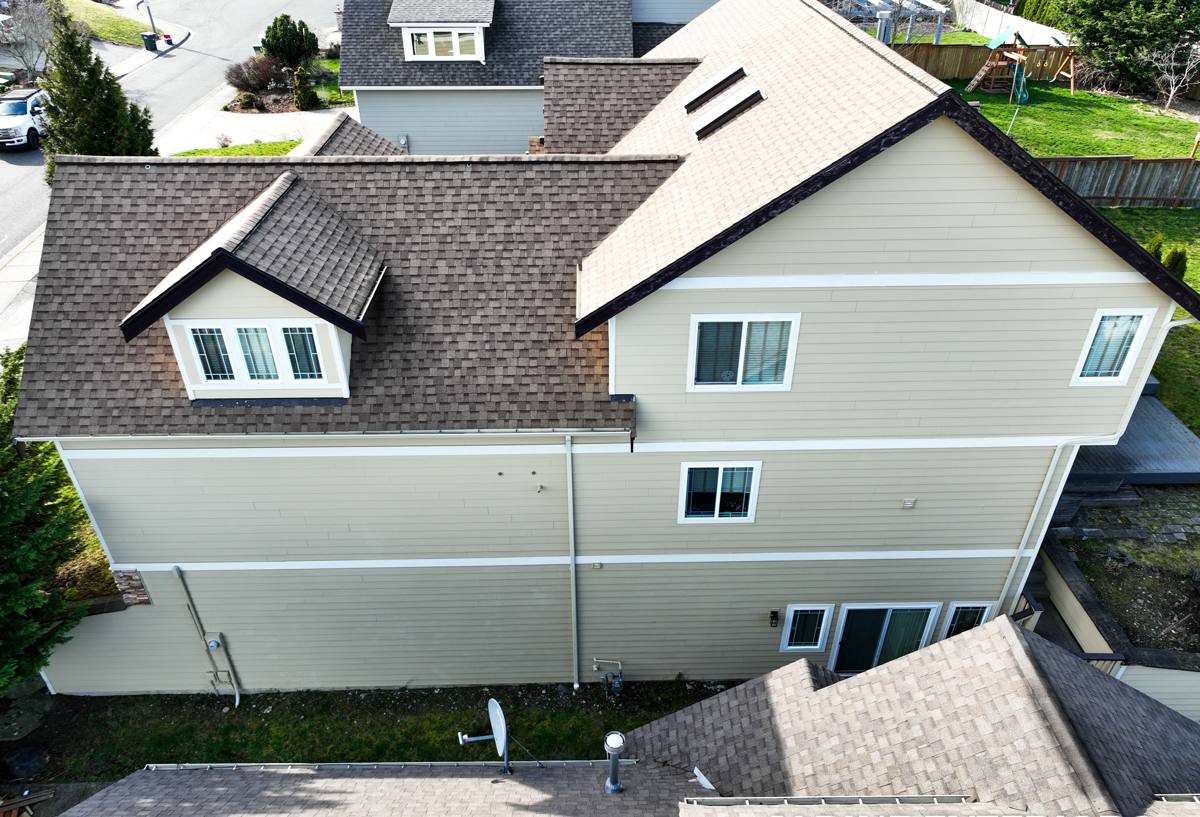
Why Birchwood's Weather Is Hard on Roofs
Salt Air and Metal Fatigue
Proximity to Bellingham Bay means homes in and around Birchwood are exposed to salt-laden air more than roofs even a few miles inland. Salt accelerates corrosion on exposed metal — flashing, fasteners, gutter hardware, and any exposed roofing nails. A fastener that would last decades in a dry inland climate can start showing rust and weakening well before its expected service life here. Storm damage often shows up first at these metal connection points, because that's where wind and rain find the weakest link.
Driving Rain and Wind
Storms coming off the water in this part of Whatcom County tend to bring rain sideways, not straight down. Wind-driven rain doesn't just test your shingles — it tests every seam, every flashing detail, and every place where two roof planes meet. A roof that sheds water fine in a calm rain can still leak in a wind event if the underlayment, flashing, or shingle overlap wasn't installed with driving rain in mind.
Moss and Moisture Retention
Fairhaven's long, wet, and often shaded conditions support a moss season that runs much longer than in drier climates. Moss holds moisture against the roof surface, works into shingle edges and granule layers, and can lift shingles just enough for wind to get underneath during a storm. A roof with an established moss problem is more vulnerable to storm damage than a clean one, because the moss has already compromised the shingles' ability to lie flat and shed water.
What Storm Damage Actually Looks Like
Storm damage isn't always a hole in the roof. Most of what we find after a wind or rain event in Birchwood falls into a few categories:
- Lifted, cracked, or missing shingles, especially near ridges, edges, and valleys where wind pressure is highest
- Flashing that has pulled loose or shifted around chimneys, skylights, and roof-to-wall transitions
- Granule loss on shingles from wind abrasion, which shows up as bare or shiny patches
- Damaged or clogged gutters and downspouts that overflow and push water back under roof edges
- Soft spots or staining on interior ceilings that show up days or weeks after the actual storm
- Moss mats that have shifted or lifted, taking shingle granules or fasteners with them
The tricky part is that a lot of storm damage isn't visible from the ground, and some of it doesn't cause a visible leak right away. Water can travel along the underlayment or framing before it ever shows up as a stain on a ceiling, which is why a proper roof-level inspection matters more than a quick look from the driveway.
What a Correct Storm Damage Repair Involves
Inspection Before Anything Else
A repair is only as good as the inspection behind it. That means getting on the roof (not just looking from the ground), checking flashing details, valleys, penetrations, and edges, and looking at the attic or interior ceiling below any area of concern for signs of moisture that haven't surfaced yet. Skipping this step is how a homeowner ends up paying for a patch that misses the actual entry point.
Matching Repair to Cause
Not every storm-damaged roof needs the same fix. A few lifted shingles from wind may only need to be re-secured or replaced in kind. Damaged flashing needs to be replaced, not just re-sealed with caulk, since caulk is a short-term fix and not a substitute for proper metal work. If moss contributed to the damage, the repair should include moss removal and a plan to slow regrowth, or the same failure will happen again in a season or two.
Matching Materials
Where shingles need replacing, matching the existing material — type, color, and where possible, age-appropriate wear — keeps the repair from standing out and keeps the roof's water-shedding pattern consistent. A mismatched patch isn't just a cosmetic issue; different shingle profiles can create small gaps or overlaps that become the next leak point.
Our Process for Birchwood Storm Repairs
- Initial contact and scheduling: we talk through what you've noticed — a leak, missing shingles, storm timing — so we know what to look for before we arrive.
- Roof and attic inspection: a full walk of the roof surface plus a look at the attic or ceiling below any suspect area.
- Written findings: what we found, what's causing it, and what it will take to fix it correctly — no pressure to decide on the spot.
- Repair or full-scope recommendation: most storm damage is a targeted repair; if the roof is old or damage is widespread, we'll say so honestly rather than patching a roof that needs replacing.
- Repair work: flashing, shingles, underlayment sections, and moss treatment as needed, done to match the existing roof.
- Final check: confirming the repair area sheds water correctly and that surrounding shingles and flashing are secure.
Repair vs. Replacement: How We Help You Decide
Storm damage doesn't automatically mean a new roof, and it doesn't automatically mean a cheap patch either. The right call depends on the roof's age, how widespread the damage is, and whether the underlying materials are still sound.
| Factor | Favors Repair | Favors Replacement |
|---|---|---|
| Roof age | Under 15-20 years, in otherwise good condition | Near or past expected shingle lifespan |
| Damage extent | Localized to one area or slope | Spread across multiple slopes or repeated over several storms |
| Moss history | Minor, surface-level growth | Long-term moss damage to granules and shingle mat |
| Underlayment condition | Intact where exposed during repair | Deteriorated or missing in inspected areas |
| Prior repairs | First or second repair on this roof | History of repeated patches in the same area |
We'll walk you through where your roof falls on this before recommending anything. A repair that's honestly the right call costs you less and holds up fine; a repair on a roof that really needs replacing just delays the inevitable and adds to what you eventually spend.
Cost Factors for Storm Damage Repair
Every roof and every storm is different, so we won't quote a number without seeing the damage, but a few things consistently affect cost:
- How many separate areas need repair versus one contained section
- Whether flashing needs full replacement or just resecuring
- Roof pitch and access — steeper or harder-to-reach roofs take more time
- Whether moss removal and treatment are part of the scope
- Shingle availability for matching an older roof
- Any decking or structural repair needed underneath, if water intrusion has been ongoing
We provide a written estimate before any work starts so there are no surprises partway through.
What Happens If Storm Damage Goes Unaddressed
Given Birchwood's rain and moss patterns, a small storm-related opening doesn't stay small. Water that gets under a lifted shingle has time to spread before the next dry stretch, and the long moss season here means damaged areas often stay damp longer than they would in a drier climate. Left alone, a minor repair can turn into damaged decking, insulation, or interior finishes — all of which cost more to fix than the roof repair would have on its own.
Why a Crew That Works Birchwood Matters
Roofing crews who work regularly in this part of Whatcom County know what to check first — the flashing details that tend to fail under wind-driven rain, the areas that hold moss longest because of tree cover or shade, and the fastener and metal choices that hold up against salt exposure near the bay. That local pattern recognition is the difference between a repair that addresses the actual cause and one that just covers the visible symptom. We service Birchwood and the surrounding Fairhaven area regularly, and we bring that experience to every inspection.
Get an Honest Assessment
If a recent storm has you noticing missing shingles, a new stain on a ceiling, or debris in your gutters that shouldn't be there, it's worth having it looked at before the next round of weather moves in. We offer a free, no-pressure estimate — we'll tell you honestly what we find and what it will take to fix it right.