 Fairhaven Siding
 Siding Installation Built for Bellingham's Climate
Bellingham sits at a point where marine air off the water, heavy seasonal rainfall, and long stretches of shade combine to create one of the more demanding climates in the Pacific Northwest for exterior building materials. Homes here don't just get wet — they stay wet, for days at a time, and they do it while breathing in a faint but constant load of salt-tinged air. Siding installed without that reality in mind tends to look tired within a decade, no matter how good it looked on install day.
This page is about one thing specifically: installing siding correctly on homes in the Bellingham area, where the combination of salt air, driving rain, and a long moss season shapes almost every decision, from the water-resistive barrier behind the siding to the finish on the outside.
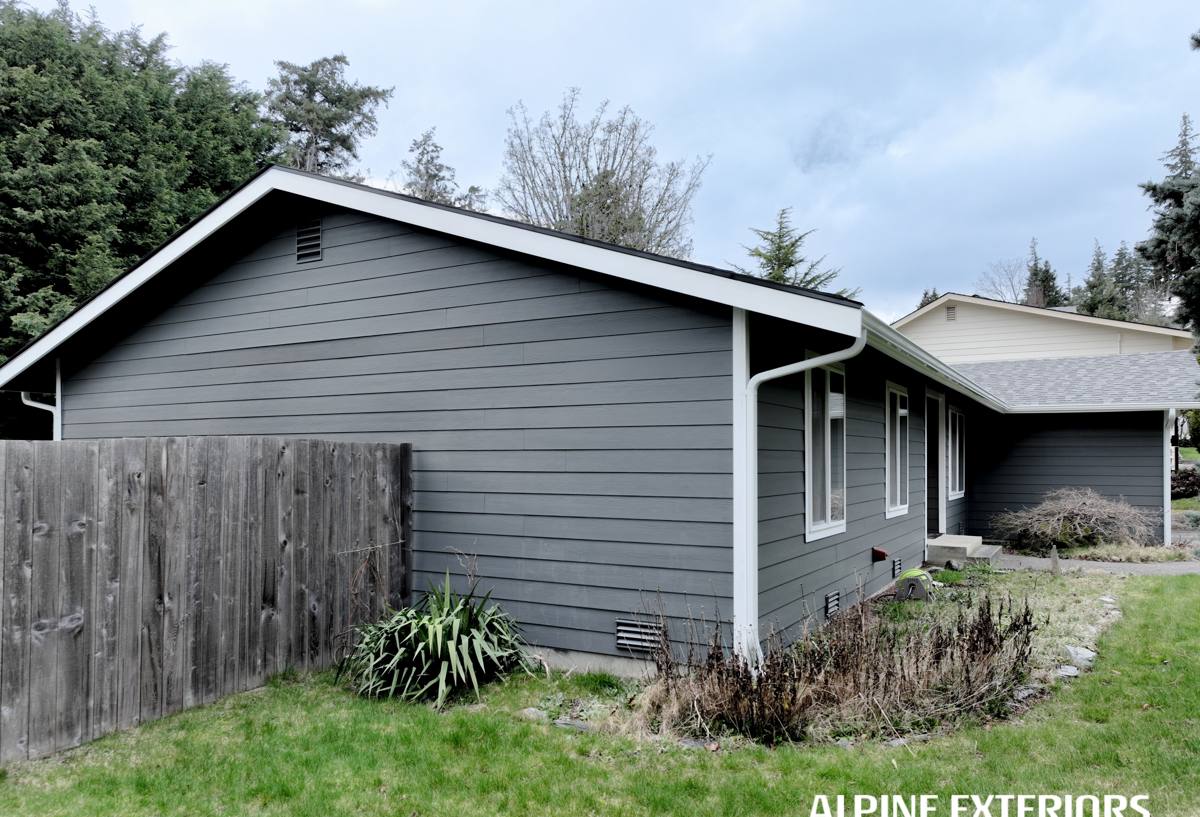
What Bellingham's Climate Actually Does to Siding
Salt air
Proximity to Bellingham Bay and the Salish Sea means airborne salt is a real, if slow, factor in exterior wear. Salt-laden moisture accelerates corrosion on exposed metal fasteners and trim, and it can contribute to premature breakdown of paint films and lower-grade composite materials that weren't engineered with coastal exposure in mind.
Driving rain
Storms here frequently come in sideways, driven by wind off the water. That means siding isn't just shedding water that falls on it vertically — it's resisting wind-driven rain that gets pushed up under laps, into seams, and around penetrations like hose bibs and light fixtures. A siding system that only handles straight-down rain well will eventually leak on a home exposed to Bellingham's weather patterns.
A long moss season
Shaded lots, tree cover, and months of damp, mild weather add up to a moss and algae season that runs far longer here than in drier climates. Moss holds moisture against a wall assembly, and on materials that aren't dimensionally stable or properly finished, that sustained dampness is where rot, delamination, and paint failure start.
What Correct Siding Installation Involves
A siding job is only as good as what's underneath it. In a climate like Bellingham's, the visible siding panel is the last line of defense, not the only one. Correct installation means:
- A continuous, properly lapped water-resistive barrier installed shingle-style so water always drains outward and down, never inward
- Correct flashing at every window, door, and penetration, integrated with the barrier rather than caulked on as an afterthought
- Proper fastener type, spacing, and depth — Bellingham's wind-driven rain finds every gap left by under-driven or misplaced nails
- Manufacturer-specified clearances from grade, roof lines, decks, and other siding terminations so water has somewhere to go
- Rain-screen or drainage gap detailing where the wall assembly calls for it, so moisture that does get behind the siding can actually dry out
- Caulking and sealant used only where the manufacturer specifies it — not as a substitute for proper flashing and lap technique
Skipping any one of these doesn't usually show up as a problem on day one. It shows up two, five, or ten winters later, as a soft spot near a window or a stain that keeps coming back no matter how many times it's painted over.
Why We Install Only James Hardie Fiber Cement
We don't install vinyl siding, LP SmartSide, primed spruce or cedar, or other fiber cement brands. That's a deliberate standard, not a sales pitch, and it comes directly from what we've seen this climate do to different materials over time.
Vinyl expands, contracts, and can become brittle in cold snaps, and its seams and J-channels give wind-driven rain more opportunities to find a way behind the cladding. Wood-based products, including engineered wood siding and traditional cedar or primed spruce, depend heavily on an intact factory or field-applied coating to keep moisture out — and in a climate with this much sustained dampness and moss pressure, any breach in that coating is an invitation for rot. These aren't defects in those products so much as trade-offs that make them a harder fit for Bellingham's specific weather pattern.
James Hardie fiber cement is non-combustible, dimensionally stable in wet-dry cycling, and doesn't feed moss or fungal growth the way wood-based sidings can. Combined with a factory-applied ColorPlus finish and a real transferable warranty, it's the product we're willing to stand behind on homes that face this much moisture, this much salt exposure, and this many shaded, moss-prone walls.
Choosing the Right Hardie Product Line for This Climate
James Hardie engineers its siding in regional HZ formulations specifically because moisture and freeze-thaw behavior differ across the country. For Bellingham and the broader Whatcom County area, that means selecting the HZ line and profile that's actually built for a wet, marine-influenced climate rather than a generic, one-size-fits-all product.
Beyond the HZ engineering, the profile choice matters too. Lap siding, board-and-batten, and shingle-style panels all shed water differently, and the right choice depends on the home's exposure, roofline, and how much of the wall sits in shade versus direct sun and wind. We walk through this with every homeowner as part of the estimate, not as an upsell but because the wrong profile for a given wall's exposure is one more way water finds a foothold.
ColorPlus Factory Finish
ColorPlus is baked on at the factory under controlled conditions, which gives it more consistent coverage and better fade and moisture resistance than field-applied paint. In a climate where repainting siding means scheduling around long rainy stretches, a finish that's engineered to hold up for years without a repaint is a genuine practical advantage, not just a cosmetic one.
Our Installation Process
1. On-site assessment
We look at the home's current siding and sheathing condition, wall exposures, moisture history, and any problem areas — soft trim, stained corners, moss buildup — before recommending a scope of work.
2. Tear-off and sheathing check
Old siding comes off and the sheathing underneath gets inspected. Any rot or water-damaged sheathing is addressed before anything new goes up; installing new siding over compromised sheathing just hides a problem that will resurface.
3. Water-resistive barrier and flashing
This is the step that matters most for long-term performance and the one most likely to get shortcut by crews unfamiliar with this climate. We install the barrier and flashing system to shed wind-driven rain correctly, with particular attention to windows, doors, and any wall penetrations.
4. James Hardie installation to manufacturer spec
Panels, fasteners, clearances, and gaps are installed to James Hardie's published requirements for the region and product line, which is also what keeps the manufacturer's warranty intact.
5. Trim, caulking, and final inspection
Trim work and any specified sealant go in last, followed by a final walk-through so the homeowner can see the finished work before we consider the job done.
Cost Factors for Siding Installation in Bellingham
Every home is different, so we don't quote a flat per-square-foot number until we've seen the house. What we can share is what tends to move the price up or down.
| Factor | Why It Matters |
|---|---|
| Tear-off vs. overlay | Removing old siding and checking sheathing takes more labor but is often necessary to address existing moisture damage |
| Sheathing or framing repair | Rot found during tear-off, common on shaded or moss-prone walls, adds material and labor to fix properly before new siding goes on |
| Home height and access | Multi-story walls, steep lots, and limited access around the home affect equipment needs and labor time |
| Trim and detail complexity | Homes with more windows, dormers, and roof intersections require more flashing and cutting work |
| Siding profile | Lap, shingle-style, and board-and-batten profiles differ in material and labor cost |
| Color and finish selection | Factory ColorPlus finishes vary in price by color line and coating type |
Signs a Bellingham Home Needs New Siding
Some of these show up gradually enough that homeowners don't notice until they're pointed out. Worth checking for:
- Soft or spongy spots when you press on siding, especially near the bottom courses or below windows
- Paint that keeps peeling or bubbling in the same spots no matter how often it's touched up
- Persistent moss or algae growth that returns quickly after cleaning
- Visible warping, cupping, or separation at seams and corners
- Stains or discoloration that track down from window heads or roof lines
- Rising energy bills that suggest the wall assembly is no longer keeping moisture and air where it belongs
- Siding that's simply reached the end of its expected service life for its material type
Why Hiring a Crew That Already Works in This Area Matters
Siding installation isn't just about following a manufacturer's install guide — it's about knowing how a specific climate stresses a wall assembly over years, not just on install day. A crew that regularly works Bellingham and the surrounding Whatcom County area has already seen which details fail first under this area's salt air, wind-driven rain, and extended moss season, and builds every job around avoiding those specific failure points. That local pattern recognition is hard to substitute with a generic install checklist alone.
It also matters for warranty support. James Hardie's product warranty and any workmanship warranty we provide are only as good as the installer standing behind them locally, years after the job is done.
Get a Free, No-Pressure Estimate
If your Bellingham home's siding is showing its age, or you're planning ahead before winter's driving rain and moss season set in, we're happy to take a look and give you a straightforward assessment — no pressure, no obligation. Use the form below to request a free estimate.